Predictive numerical simulations of double-branch stent-graft deployment in an aortic arch aneurysm

Objective
Total endovascular repair of the aortic arch is a promising option for patients who are ineligible for open surgery.
However, custom-made branched stent-grafts such as the Terumo Aortic RelayBranch device require complex pre-operative planning, and accurate deployment is extremely challenging in the highly curved anatomy of the aortic arch.
The objective of this work is to develop a computational tool able to predict stent-graft deployment in these highly complex situations, to help clinicians plan and perform safer interventions.
Methods
We developed a patient-specific finite element model based on the pre-operative CT-scan of a 74-year-old man treated with a double-branch device for a 58 mm aortic arch aneurysm.
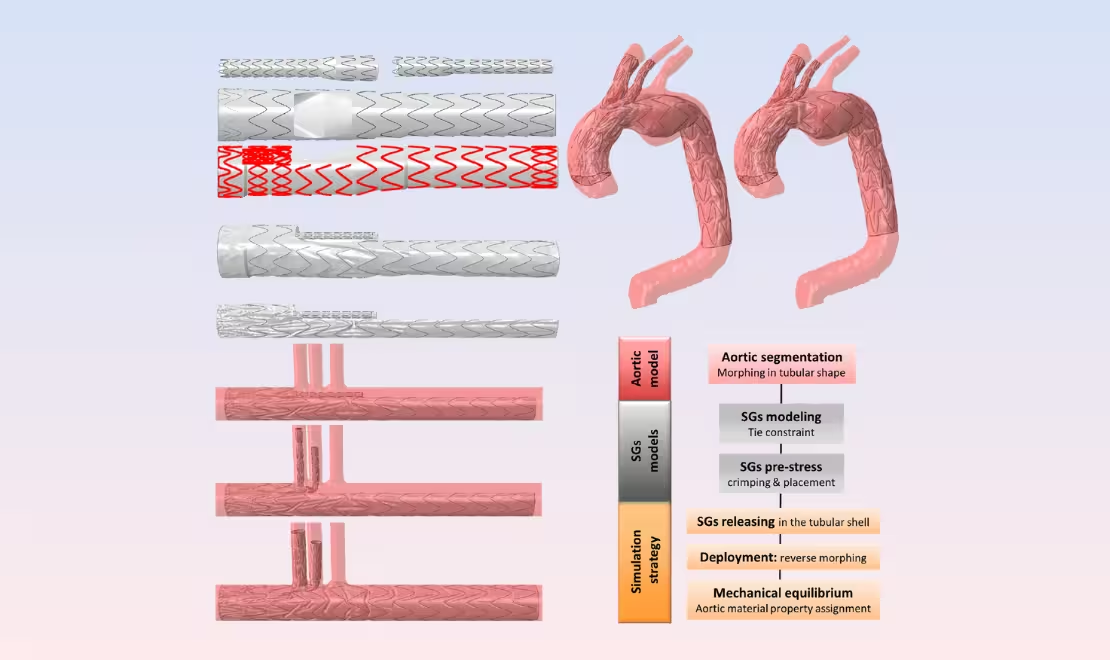
Using a virtual shell (morphing) method, we simulated the complete deployment of the main stent-graft and its two bridging stents, including a torsion effect observed on the delivery system.
We compared the simulated stent positions with the post-operative CT-scan and ran a sensitivity analysis to assess the influence of aortic wall stiffness and friction coefficients.
Results
A complete deployment simulation was successfully performed, showing very good agreement with the post-operative scan — including accurate reproduction of the device torsion at a 135° rotation.
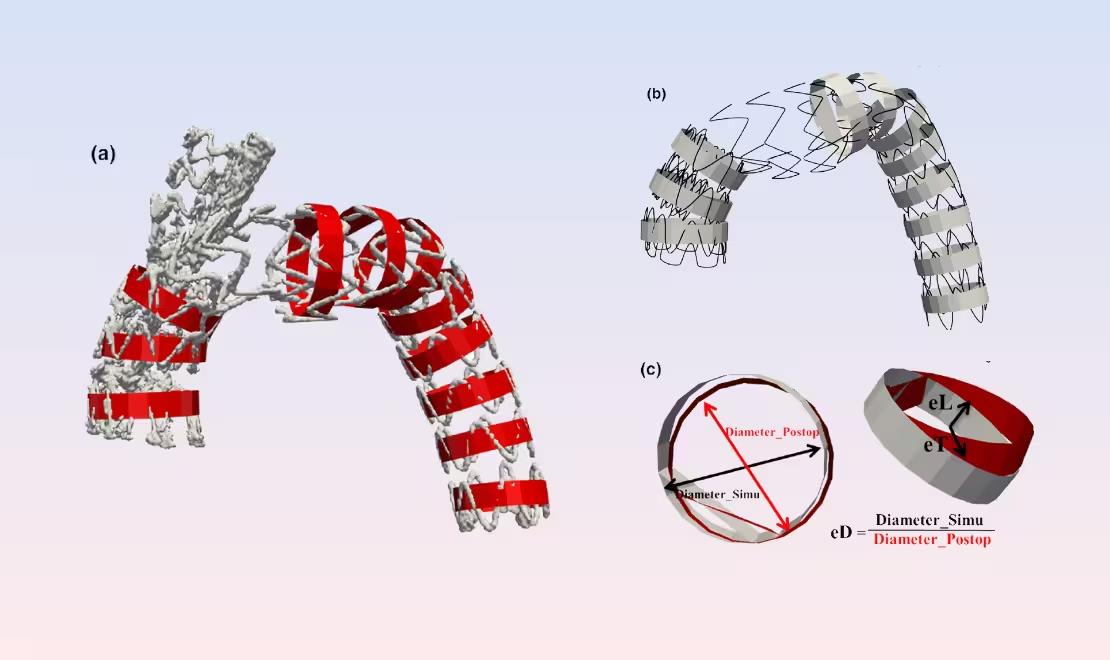
Relative diameter, transverse and longitudinal deviations were 3.2 ± 4.0%, 2.6 ± 2.9 mm and 5.2 ± 3.5 mm respectively.
The sensitivity analysis showed that results were only marginally affected by aortic wall stiffness, while proximal friction was important for realistic apposition and avoiding artificial "bird-beak" effects.
Conclusion
This work is, to our knowledge, the first report of complex branched stent-graft deployment simulated in the challenging anatomy of the aortic arch using finite element analysis.
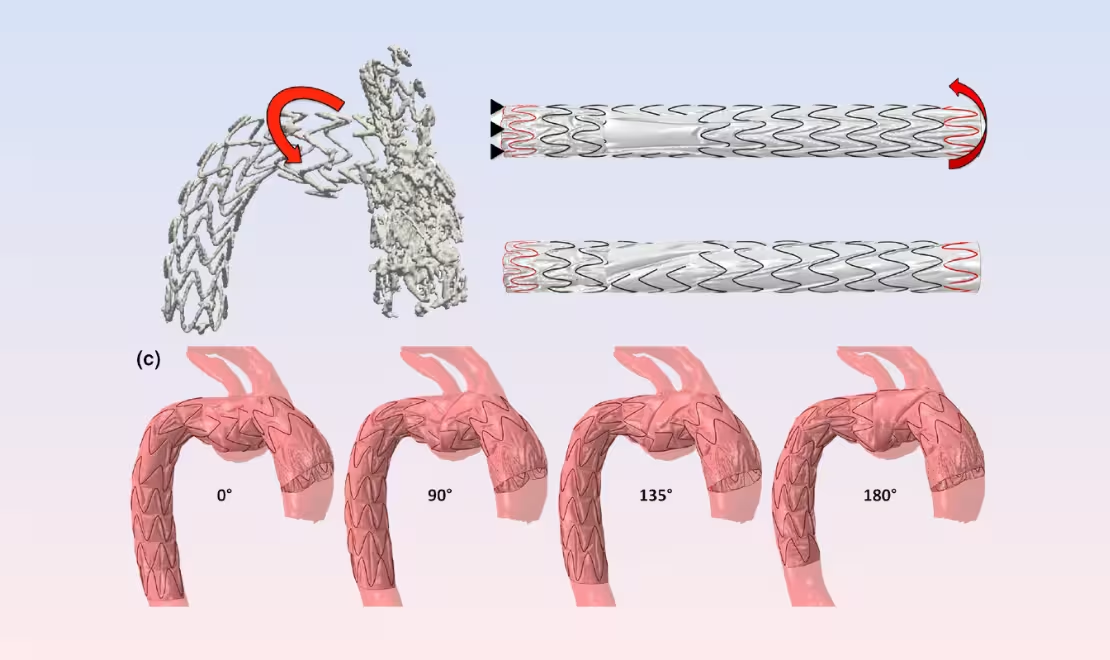
It demonstrates that patient-specific simulation can accurately predict device behavior — even torsion-related complications — and shows the potential of computational modeling to assist practitioners in planning faster, more reliable and safer arch interventions, pending validation on larger patient series.