From crash test to surgery: Improvement of stent-graft design using numerical simulation

Background
Numerical simulation is a computer based mathematical technique to predict mechanical interactions between two bodies. It is well known and used in the automotive and aerospace industries since years. Today, it is also possible to use numerical simulation to predict stent-graft behavior in a patient specific aortic model and plan custom-made complex prosthesis.
Objectives
The current planning method for a fenestrated endovascular repair in complex aortic aneurysm, is a time, human resource and material intensive process, which takes weeks to months.
The sizing of the graft and positioning of fenestrations should be as accurate as possible to avoid intraoperative complications and enable successful aneurysm exclusion.
Precise prediction of graft deployment and alignment within the patient’s aorta is currently only available in physical models.
Methods
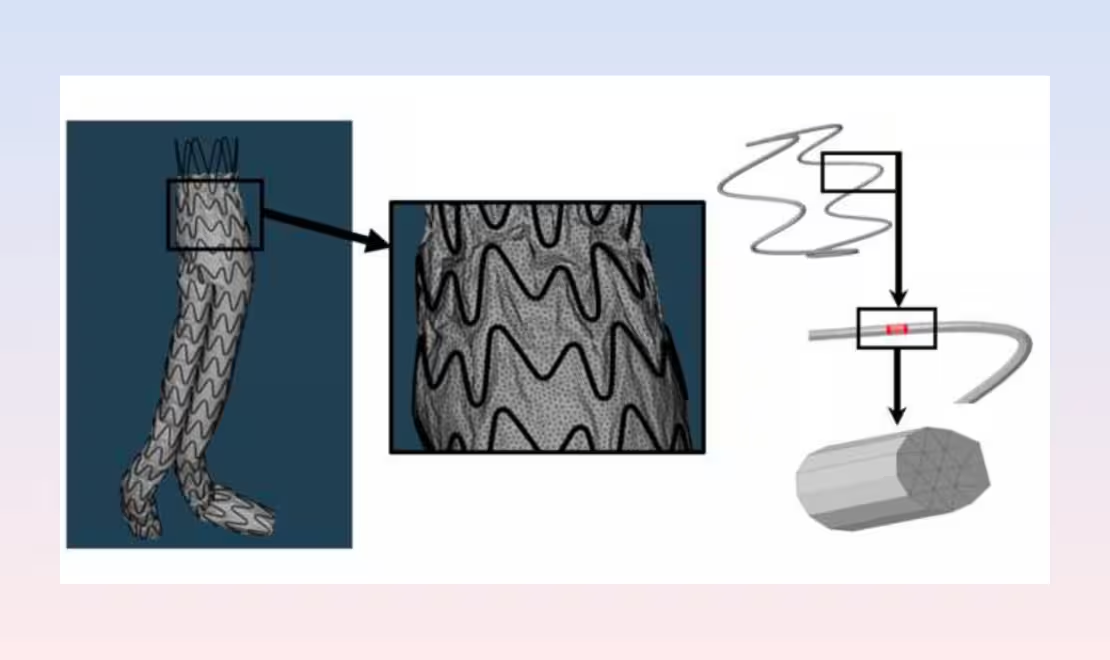
Numerical simulation using finite element analysis does enable this prediction. The mechanical properties of the stent-graft and the arterial wall are implemented to the digital model and graft deployment may be simulated and graphically shown in a rotatable, three-dimensional model. It is possible to prove the ideal stent-graft sizes and positions of fenestrations.
Results
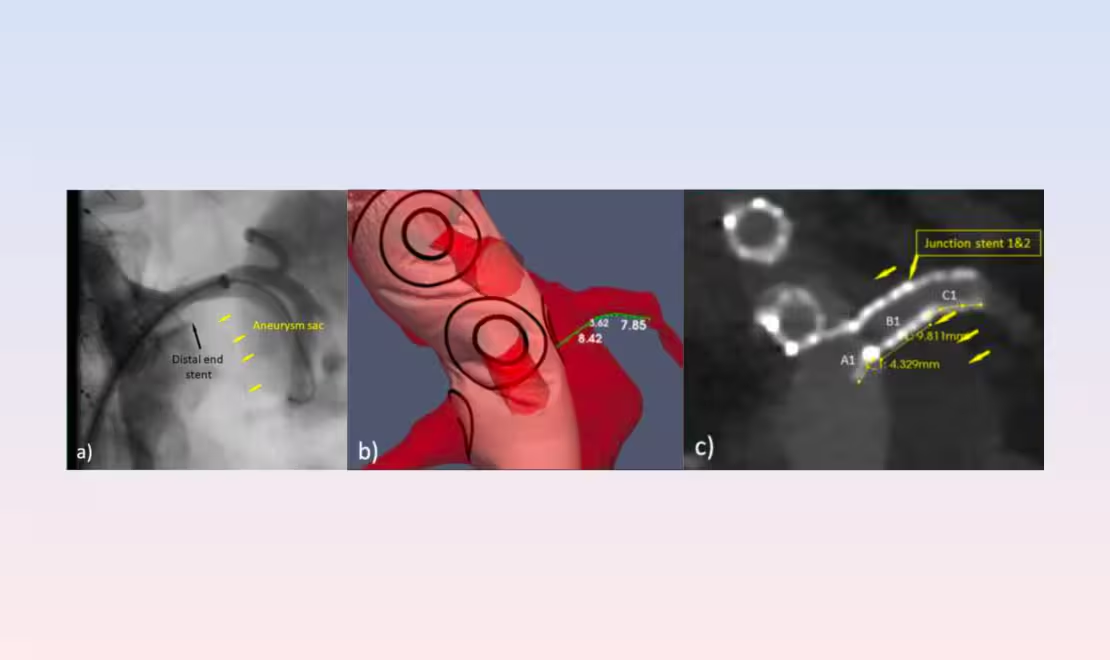
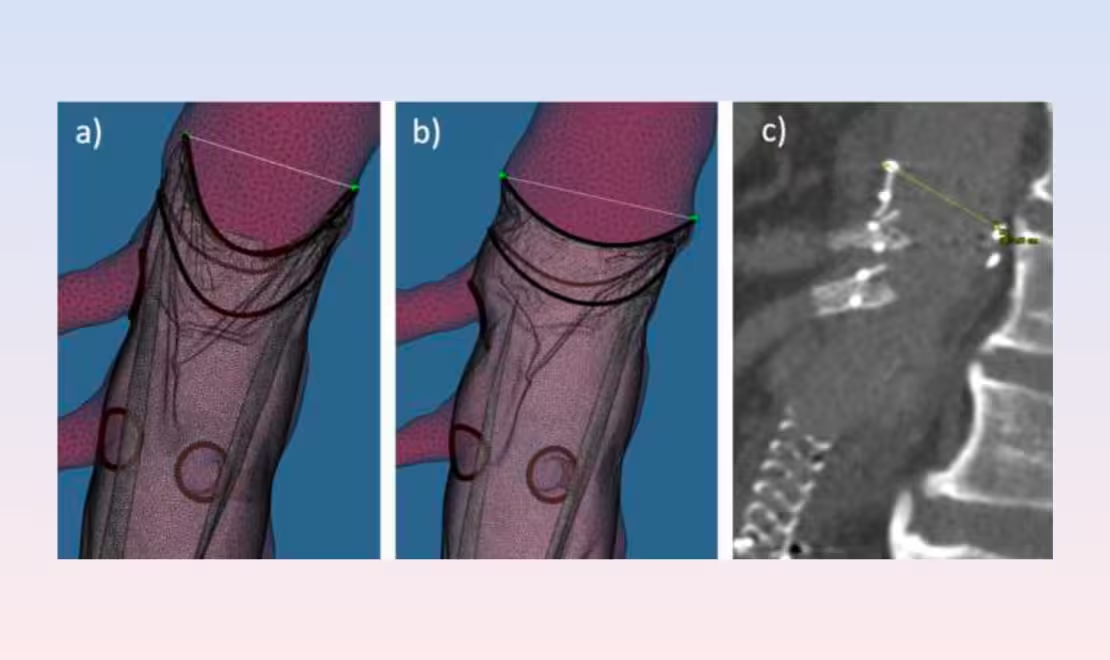
The results of a prospective multi center study show that planning fenestrated grafts using numerical simulation is accurate and time saving compared to the conventional planning process. Moreover, a user-friendly online platform was developed which allows the treating physician to get and prove a complex custom-made graft planning within 24 hours.